Buying guides
Hybrid vs laminate flooring: which suits your Sydney home?
They look almost identical in the showroom, but they behave very differently in a kitchen, a rental or a house with a dog. Here's how to choose.
By the Austt Flooring team · · 2 min read
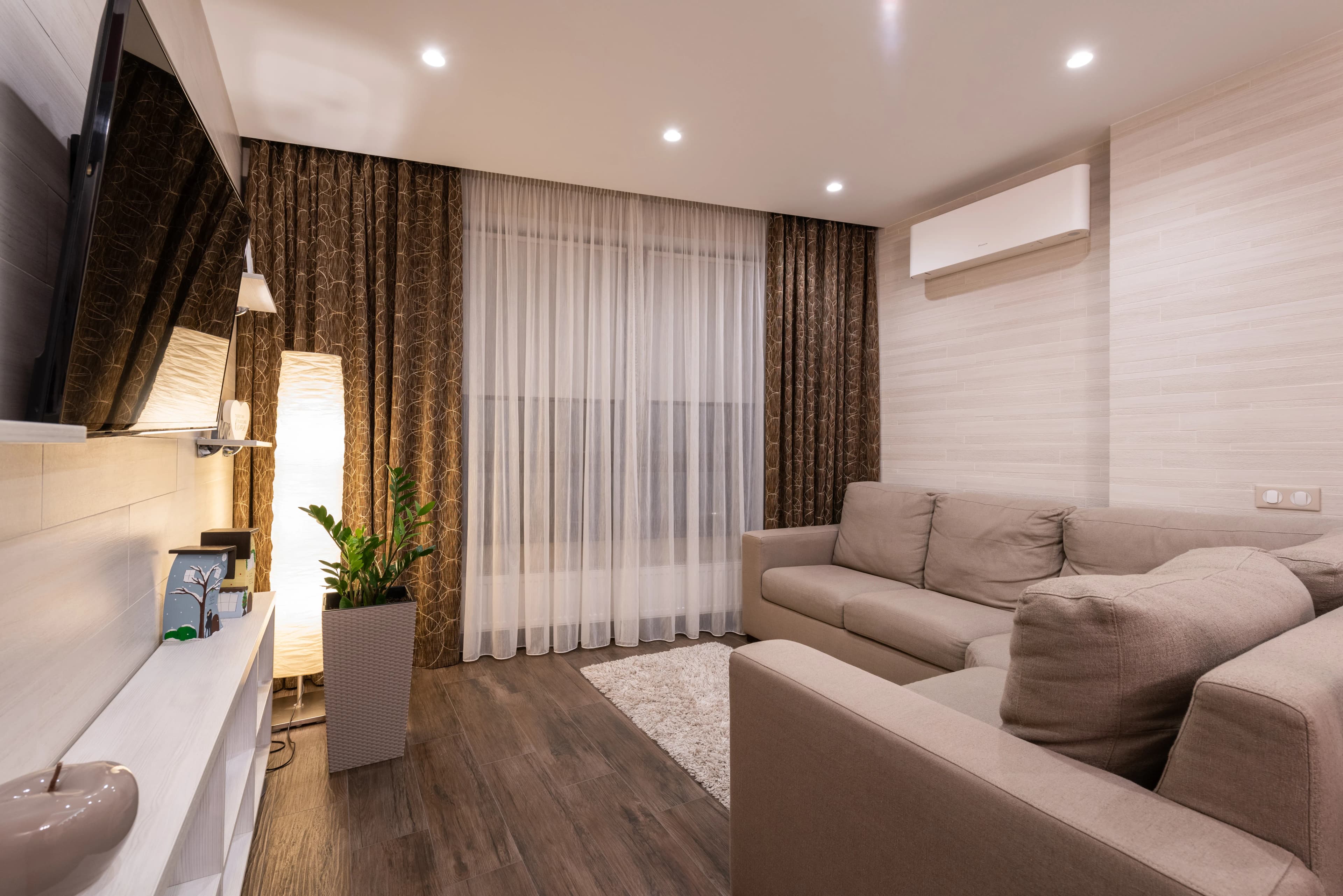
Hybrid and laminate are the two most popular floating floors in Sydney right now, and on a sample board they can be almost impossible to tell apart. Both click together, both float over an underlay, and both use a printed timber design under a clear wear layer. The difference is in the core — and that decides where each one belongs in your home.
The short answer
Choose hybrid for kitchens, laundries, rentals and homes with pets or young kids, where water and wear are daily facts of life. Choose laminate for bedrooms, upstairs rooms and home offices, where it's usually warmer underfoot and cheaper for the same look.
What's actually different
Laminate is built on a high-density fibreboard (HDF) core. It's hard-wearing and stable, but fibreboard swells if water gets into the joints and sits there. Many modern ranges have sealed edges and are sold as water-resistant, which is a genuine improvement, but they still don't like standing water.
Hybrid replaces fibreboard with a rigid core made from limestone and polymer (often called SPC) or a similar composite. The core itself doesn't swell when it gets wet, which is why hybrid has become the default for open-plan kitchen and living areas.
| Hybrid | Laminate | |
|---|---|---|
| Core | Rigid stone-polymer composite | High-density fibreboard |
| Water | Core resists water; fine for kitchens and laundries | Wipe spills quickly; water-resistant ranges help |
| Feel underfoot | Firm, slightly cooler | Warmer, a little softer with good underlay |
| Scratch resistance | Good | Very good — laminate wear layers are extremely hard |
| Relative cost | Mid | Lowest |
| Best rooms | Kitchens, laundries, living, rentals | Bedrooms, upstairs, offices |
Noise and strata buildings
Both are floating floors, so both can sound a little hollow if the underlay is wrong. In apartments the underlay matters even more, because most NSW strata schemes have by-laws about impact noise for hard floors. Whichever you choose, we match the underlay to your subfloor and any acoustic requirement — see our guide to flooring in strata apartments for how that works.
Flatness matters more for hybrid
Because hybrid is rigid, it doesn't bend over humps and dips in a slab. An uneven subfloor can leave boards rocking or joints lifting. That's why we check flatness with a straightedge on the quote visit and put any grinding or levelling in writing — part of our standard floor installation process.
Which is better value?
Laminate is usually the cheaper product per square metre. But if you're doing the whole ground floor including the kitchen and laundry, putting hybrid through everything often beats mixing two products, because you avoid extra trims at every doorway and get one continuous floor. Our Sydney flooring cost guide breaks down the rest of the quote.
Our recommendation
- Single-level home with open-plan kitchen: hybrid throughout.
- Double-storey: hybrid downstairs, laminate upstairs in bedrooms.
- Rental or investment property: hybrid, for water resistance and easy plank replacement.
- Tight budget, dry rooms only: laminate with a quality underlay.
Frequently asked questions
Is hybrid flooring waterproof?
The planks resist water and won't swell, but no floating floor should be flooded. Spills, mopping and wet feet are fine; water sitting under the floor is not.
Is laminate out of date?
No. Modern laminate is extremely scratch-resistant and convincing, and it's still the best-value choice for dry rooms such as bedrooms.